Print embellishment visualization
Foil, spot UV, emboss, deboss, varnish and soft-touch are effects, not colors. Show them moving under real light so your customer approves the upgrade they are paying for.
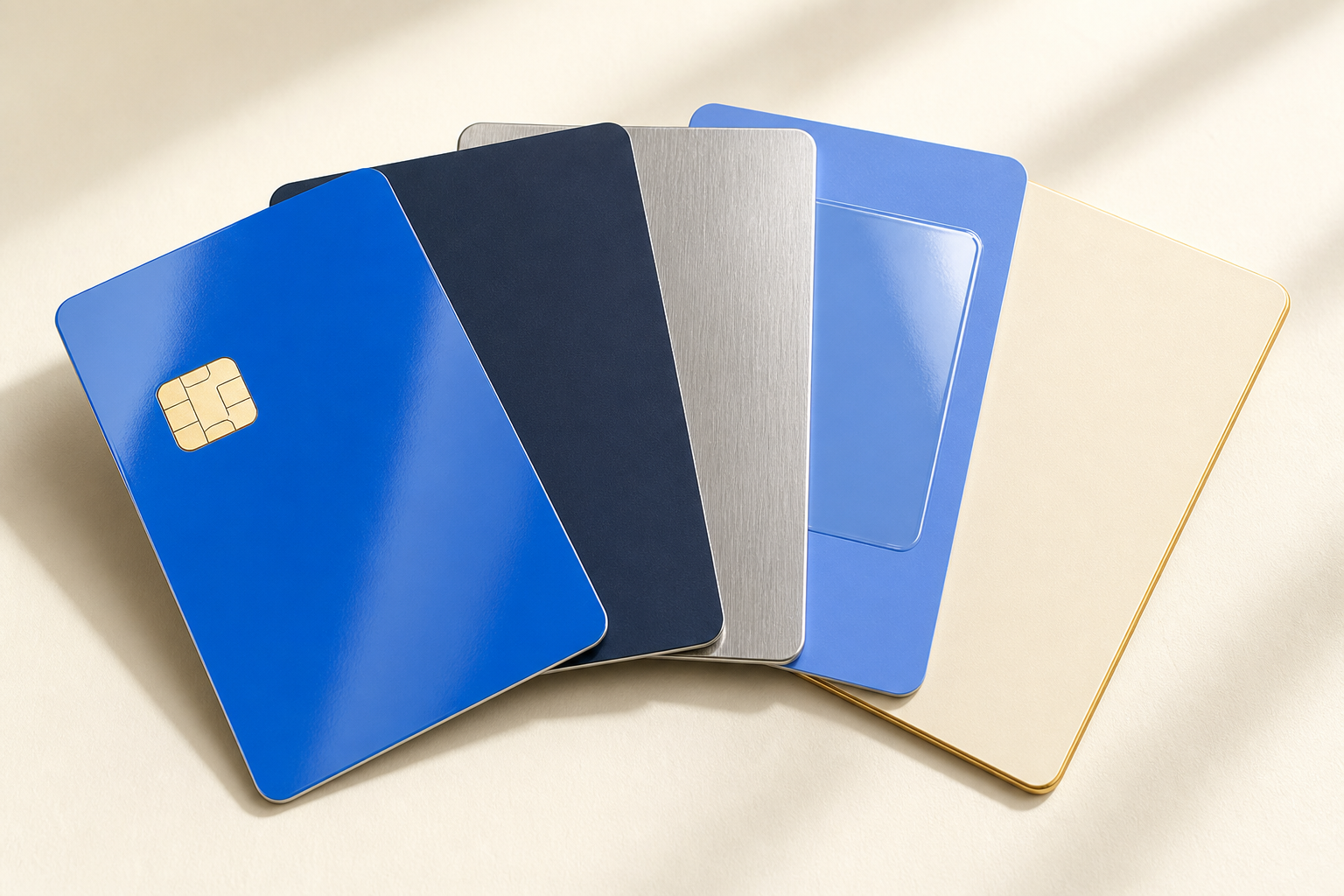
You cannot print a foil effect onto a proof sheet
Every specialty finish is a light behavior. Flat proofs turn them into annotations, and annotations do not sell finishing.
Foil that catches the light
Hot foil, cold foil and digital foil only exist as an effect when light moves across them. A rotating 3D proof shows that behavior; a magenta keyline on a proof sheet marked "FOIL" does not.
Spot UV against its background
High-build gloss over soft-touch matte is one of the most-sold and least-understood upgrades in print. Seeing the contrast between the varnished and unvarnished areas is what makes a customer say yes to it.
Emboss and deboss with real relief
Depth, bevel and the loss of fine detail at small sizes are impossible to judge from a flat file. Showing relief under raking light tells the customer whether their mark will hold up at the size they drew it.
Soft-touch, matte and gloss surfaces
Lamination changes how every color underneath it reads. Presenting the surface honestly stops the "it looked brighter on screen" conversation and sets the right expectation for the finished piece.
Approve the effect, not the annotation
Specialty finishing has always had a proofing problem. The finishing separation is a technical layer: a solid shape, a spot channel, a note that says foil, deboss or high-build. It tells the die maker and the press operator exactly what to do, and it tells the customer almost nothing about what they will receive.
So finishing gets approved on trust and judged on delivery. Sometimes that goes well. Often it produces the two conversations every shop knows: the customer who is disappointed because they pictured something more dramatic, and the customer who declined the embellishment because they could not picture it at all. The first costs a remake, the second costs the margin the job was quoted on.
ProofScene renders finishing as finishing. The piece turns, and the foil sweeps as the light crosses it. The spot UV sits proud of the soft-touch base and shows an edge where it stops. The deboss holds a shadow, and if the mark is too fine to survive at that size, that is visible now rather than after the die is cut. Because it opens in a browser as a branded link, it works as a selling tool as much as an approval tool: the finishing options can be shown before the customer has committed to any of them.
Related pages: finish & material visualization, packaging proofing, card & credential proofing, and the guide on showing spot UV, foil, emboss and varnish digitally.
Embellishment visualization, answered
Short, straight answers to the questions we are asked most. If yours is not here, ask.
Ask us anythingWhat is print embellishment visualization?
It is showing specialty finishing (foil, spot UV, embossing, debossing, varnish and soft-touch lamination) on a 3D model of the printed piece, so a customer can see the effect before it is produced. On a flat proof those finishes are only annotations; in 3D they behave the way they will on the finished job.
Which embellishments can ProofScene show?
Hot, cold and digital foil, spot and high-build UV, embossing and debossing, gloss and matte varnish, soft-touch lamination and metallic effects. The aim is that a customer sees what the finishing line will produce, not a colored keyline standing in for it.
Why does this matter commercially?
Because embellishment is where the margin is, and it is the hardest thing to sell from a flat PDF. A customer who can see the foil move and the spot UV catch the light is being asked to approve an effect rather than to imagine one, which is a much easier conversation.
Can it show finishes on packaging, cards and covers?
Yes. The same visualization applies across folding cartons, plastic cards, book covers, folders, stationery and labels: anywhere a finishing pass changes how the piece looks in the hand.
Does the customer need special software to view it?
No. Embellished proofs open in a normal browser through a branded link, so a brand manager can rotate the piece and inspect the finish without installing anything.
Is an embellishment proof a color-accurate proof?
No. It represents the appearance, placement and behavior of finishes for visual approval. It is not a calibrated contract-color proof unless a color-managed workflow is used, and metallic and varnished surfaces in particular are appearance-led rather than color-measured.
Show your next foil job in motion
ProofScene is opening early access to print shops and product suppliers. Join the list and be first to turn your proof sheets into interactive 3D approvals.
No credit card · Built by print people · Launching soon