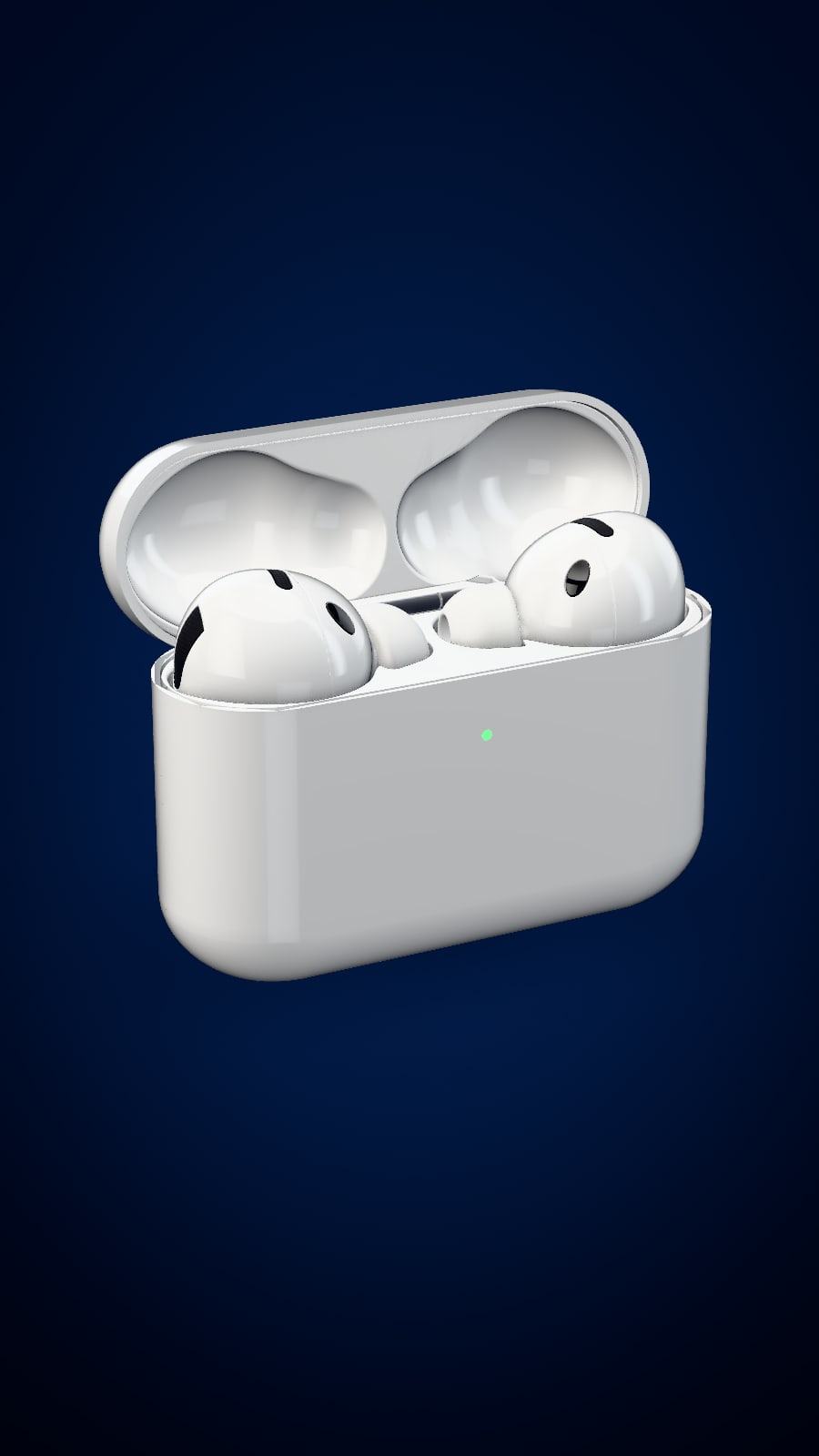
See InsideHeadphonesUpdated
How does noise cancelling work?
Noise cancelling works by adding sound, not by blocking it. A microphone on the outside of each earbud hears the noise around you, the H2 chip creates the exact opposite sound wave, and the speaker plays it into your ear at the same moment, so the two waves cancel out. A second microphone inside listens for anything left over and corrects it. Watch it happen inside AirPods Pro above.
How it works, step by step
Follow the AirPods Pro from the outside in. Each step is something you can see happen in the 3D view above.
Sound is a wave
Every sound is a wave of air pressure: high, low, high, low. Flip a wave upside down and add it to the original, and the highs fill the lows until almost nothing is left.
The outside microphones listen
Beamforming microphones on the outside of each earbud pick up the hum of a plane, a bus or an air conditioner. That lets the earbuds cancel it before you hear it.
The chip makes anti-noise
The H2 chip reads that sound and calculates its mirror image, a wave called anti-noise. The driver plays it together with your music, continuously.
The inside microphone checks
An inward-facing microphone listens inside your ear for any noise that is left, and the earbuds cancel that too. The H2 chip reduces noise 48,000 times a second.
The seal does the rest
Anti-noise is strongest on low, steady sounds like engines and fans. The foam-infused ear tips seal your ear and block the higher, sharper sounds.
Transparency mode
Transparency does the opposite and lets the world back in, so you hear a voice or an announcement without taking the earbuds out.
The parts inside the AirPods Pro
- H2 chip
- Apple’s headphone chip, which runs noise cancelling, Transparency and Adaptive Audio.
- Beamforming microphones
- Two outward-facing microphones per earbud that hear the noise around you.
- Inward-facing microphone
- Listens inside the ear and removes the noise that is left.
- High-excursion driver
- Apple’s custom speaker, playing your music and the anti-noise together.
- High dynamic range amplifier
- Powers the driver cleanly, loud or quiet.
- Heart rate sensor
- Reads your heart rate during workouts.
- Skin-detect sensor
- Knows when the earbud is in your ear.
- Battery
- Up to 8 hours of listening with noise cancelling on.
- Silicone ear tip
- Silicone with a thin layer of soft foam that seals the ear, in five sizes from XXS to L.
- Charging case
- MagSafe and USB-C charging, a speaker for Find My and up to 24 hours in total.
AirPods Pro questions
Straight answers about the AirPods Pro and what happens inside it.
See inside more productsHow does noise cancelling work?
Microphones pick up the noise around you, a chip creates the opposite sound wave, and the speaker plays it at the same time, so the noise and the anti-noise cancel each other out. Physicists call this destructive interference.
How do AirPods Pro cancel noise?
Each earbud has outward-facing microphones that hear the noise, an H2 chip that makes the anti-noise and an inward-facing microphone that checks what reaches your ear and removes what is left. The foam-infused ear tips block higher sounds as well.
Why does noise cancelling work best on low sounds?
Low sounds like engine hum have long, steady waves that the chip can match precisely. Short, sharp sounds change faster, so the seal of the ear tip blocks most of those instead.
What is the difference between active and passive noise cancelling?
Passive noise cancelling blocks sound physically, the way an earplug does. Active noise cancelling uses microphones, a chip and the speaker to cancel sound with an opposite wave. AirPods Pro use both together.
What does Transparency mode do?
Transparency mode lets outside sound in, so you can hear voices and traffic with your AirPods in. Adaptive Audio blends noise cancelling and Transparency to suit where you are.
How long does the AirPods Pro 3 battery last?
Up to 8 hours of listening on one charge with Active Noise Cancellation on, and up to 24 hours with the charging case, by Apple’s figures.
What chip is in AirPods Pro?
AirPods Pro 3 use the Apple H2 headphone chip. It runs noise cancelling, Transparency, Adaptive Audio and the wireless link to your phone.
How do AirPods Pro 3 measure heart rate?
AirPods Pro 3 measure heart rate with a sensor in each earbud. LEDs pulse invisible light 256 times a second, and the earbuds combine those readings with data from their accelerometers. The result is accurate heart rate data for up to 50 different workout types, shown in the Fitness app on iPhone.
Can AirPods Pro work as hearing aids?
Yes. AirPods Pro 3 and AirPods Pro 2 have a clinical-grade Hearing Aid feature for adults 18 and older with perceived mild to moderate hearing loss. It tunes the sound to your results from a hearing test or an audiogram, then amplifies the sounds around you while the earbuds are in Transparency mode.
Sources
- AirPods Pro 3 - Tech SpecsApple
- AirPods Pro 3Apple
- Active Noise Cancellation and Transparency modes for AirPodsApple Support
- Use the Hearing Aid feature on your AirPods Pro 2 or AirPods Pro 3Apple Support
- AirPods redefine the personal audio experienceApple Newsroom
- Active noise controlWikipedia
Make them yours
Engrave your name or your company’s logo on the case, pick a finish and a color, and share your AirPods with one link. Whoever opens it can look inside them too.
- 1Type your name, or a website and we find its logo
- 2Pick the engraving style, the finish and the color
- 3Share your link, a picture or a short video
See inside more products
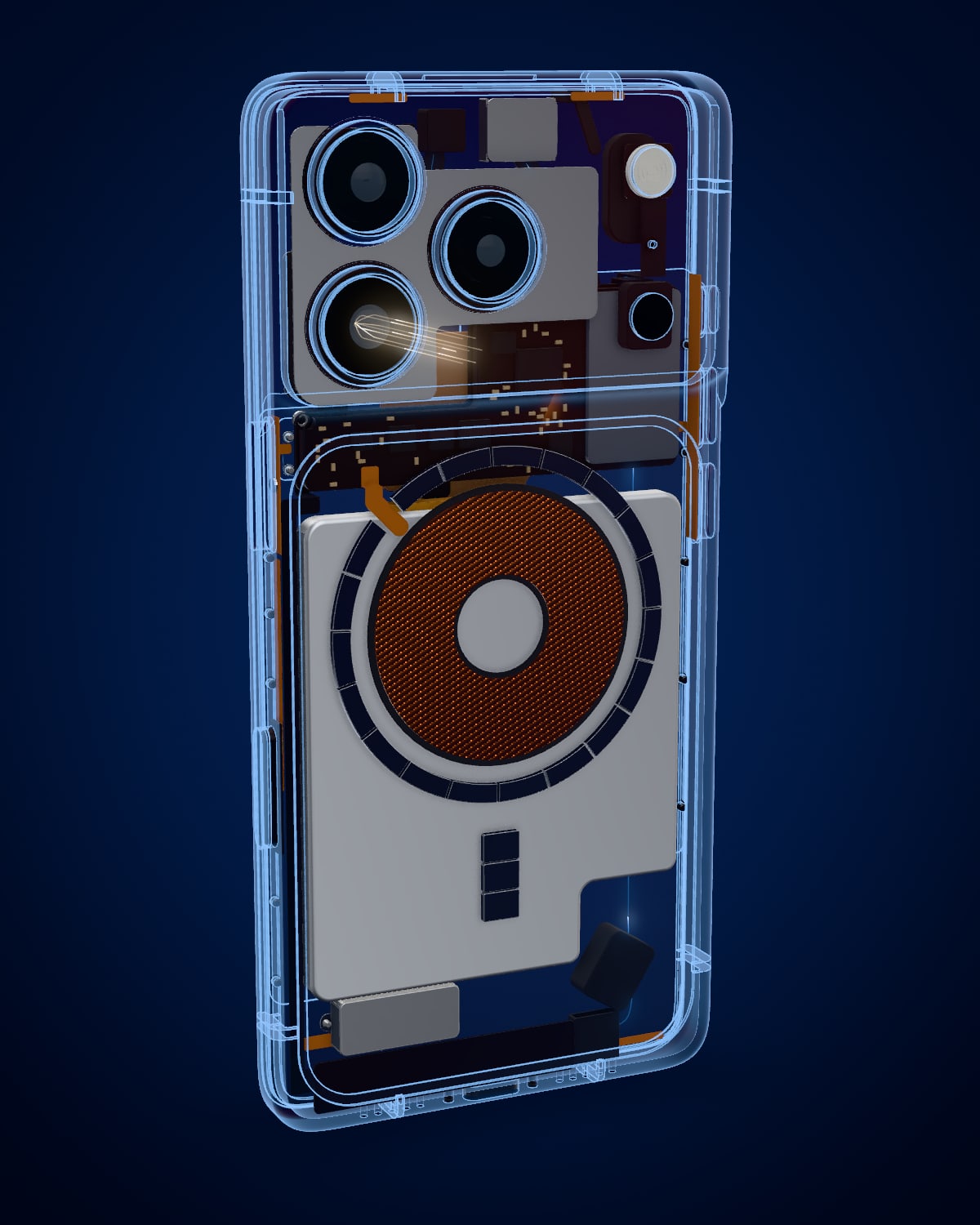
iPhone 17 Pro
What’s inside an iPhone 17 Pro?See inside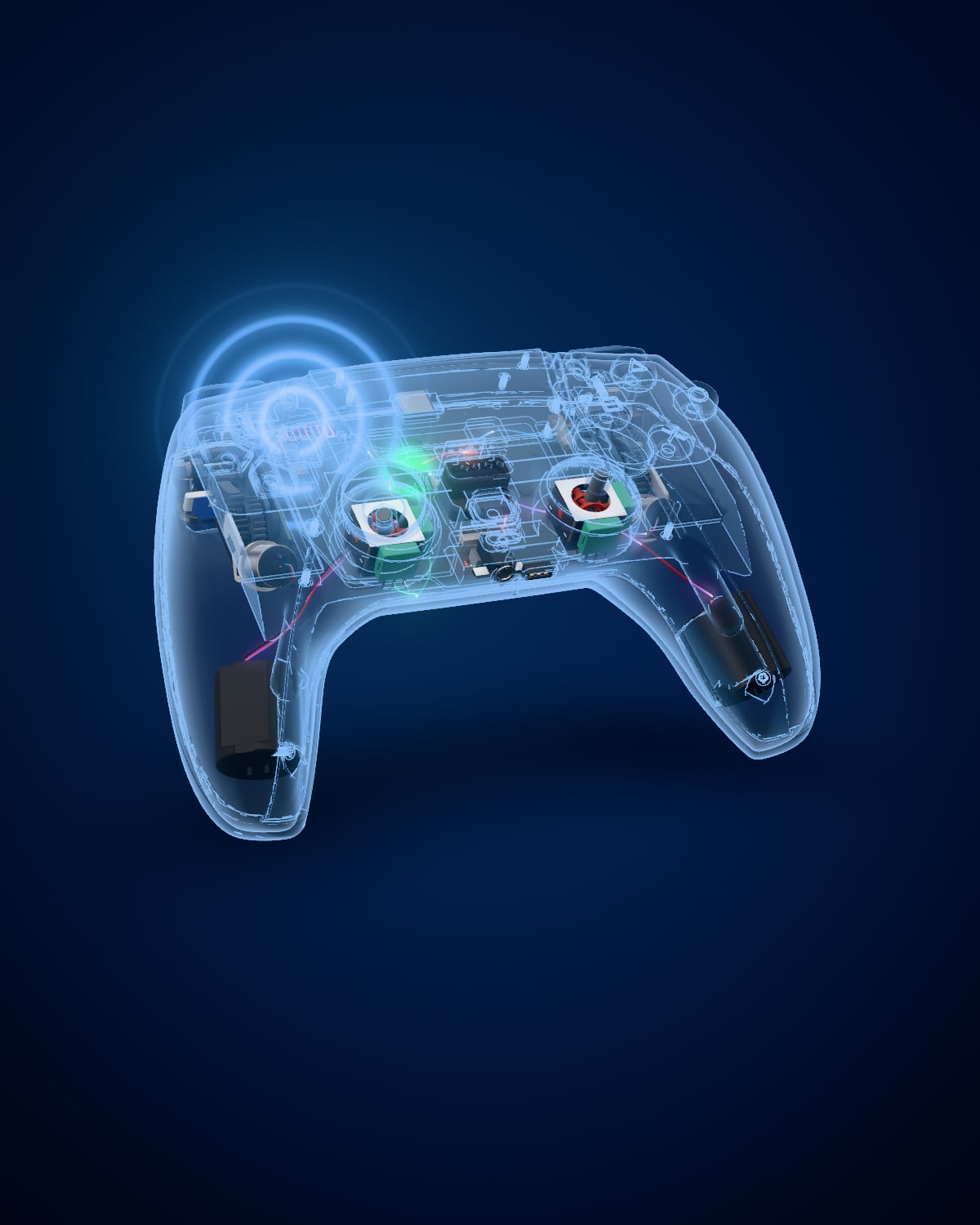
PS5 controller
How do PS5 adaptive triggers work?See inside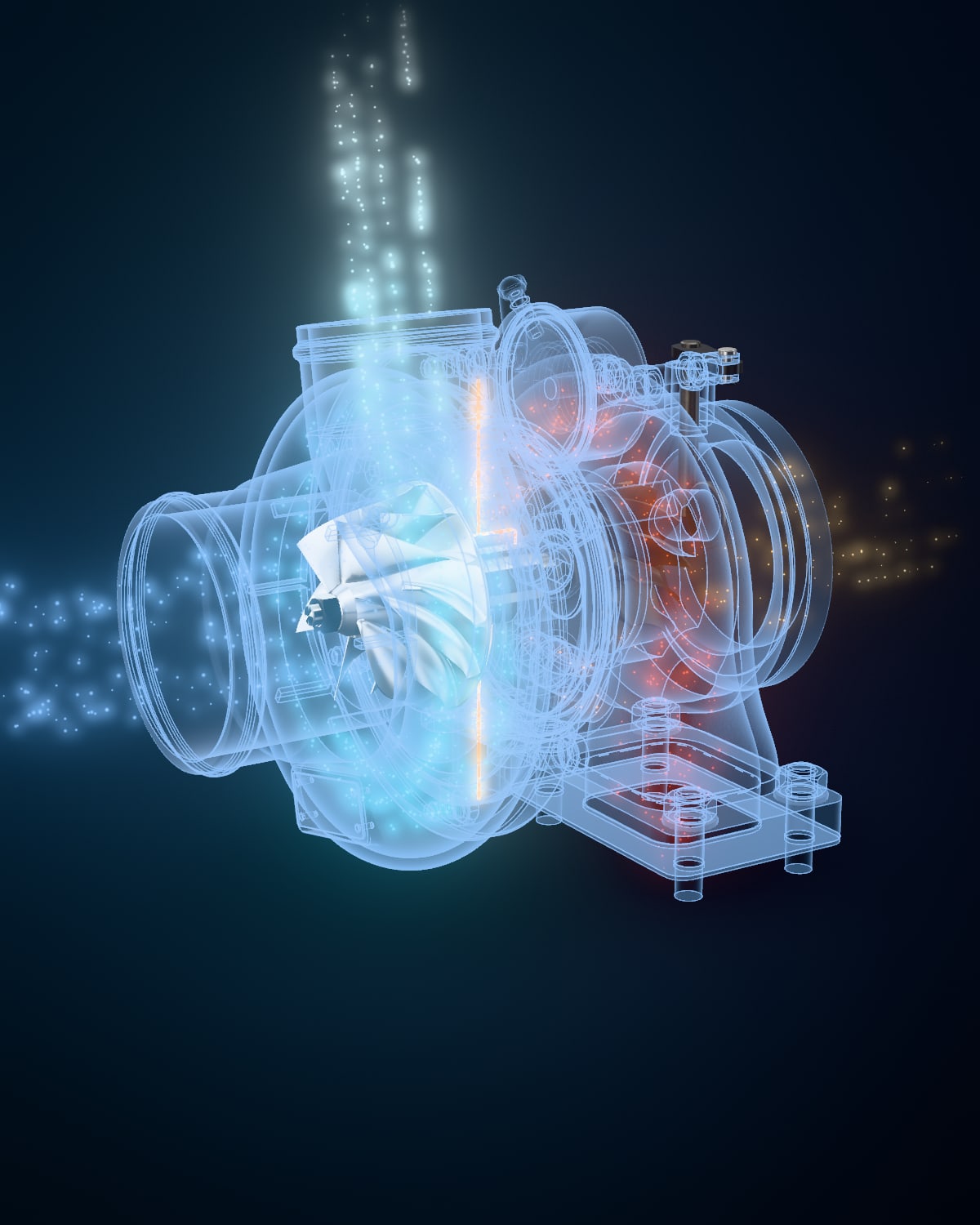
Turbocharger
How does a turbo work?See inside
Mechanical watch
How does a mechanical watch work?See inside
Brass padlock
How does a lock work?See inside
AirTag
How does an AirTag work?See inside
Centrifugal pump
How does a centrifugal pump work?See inside- 8 products in 3D
All of See Inside
Every product, inside and outSee them all
Made with Proofscene
This page runs on the 3D technology we use to build interactive product demos for manufacturers: built from CAD, running in any browser, on their own website.
Interactive 3D product demos