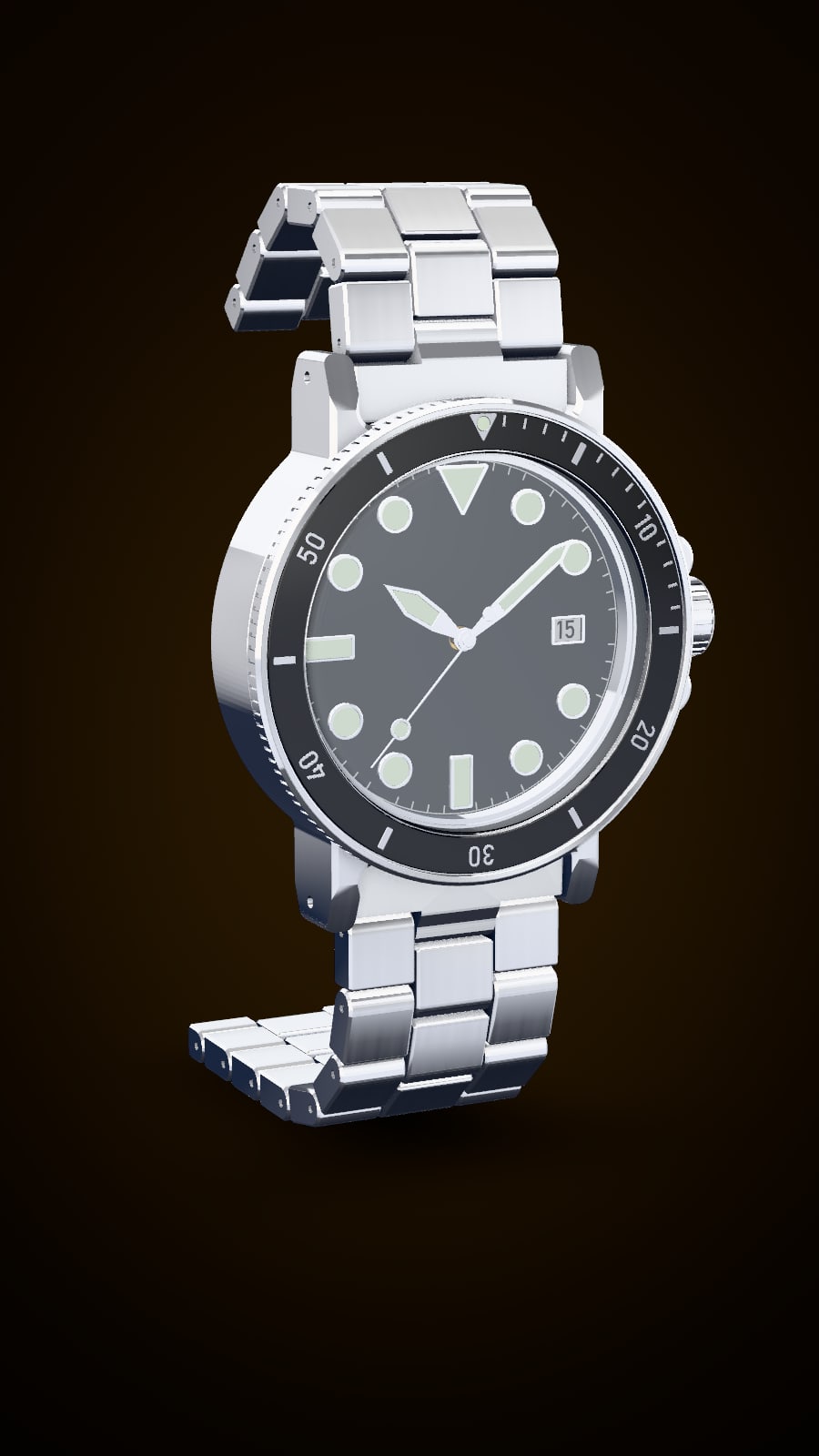
See InsideWatchesUpdated
How does a mechanical watch work?
A mechanical watch runs on a coiled spring, not a battery. The wound mainspring slowly unwinds and turns a train of gears, the escapement lets that energy out in tiny, even steps, and a balance wheel swinging back and forth at a steady beat keeps the time. Each tick you hear is the escapement releasing one step. See every part move above.
How it works, step by step
Follow the mechanical watch from the outside in. Each step is something you can see happen in the 3D view above.
Power in the mainspring
Winding the crown coils a long spring inside a drum called the barrel. That stored energy runs most watches for around two days.
The gear train
The barrel turns a chain of gears, each turning faster than the one before. They carry the power to the hands and on to the escapement.
The escapement
The escape wheel would spin freely if nothing stopped it. A rocking lever called the pallet fork locks it and releases it one tooth at a time, and each release is a tick.
The balance wheel
The balance wheel swings back and forth on a hair-thin spring, at the same rate every time. It tells the pallet fork when to let the next tooth go, which keeps the watch on time.
Jewels
Tiny synthetic rubies hold the pivots of the busiest parts. They are hard and smooth, so the parts turn with very little friction for years.
Winding by itself
In an automatic watch, a half-moon weight called the rotor spins with every move of your wrist and winds the mainspring for you.
The parts inside the mechanical watch
- Mainspring and barrel
- The coiled spring that stores the watch’s energy, in its drum.
- Gear train
- The center, third and fourth wheels that carry power to the hands.
- Escape wheel
- The toothed wheel the escapement releases one tooth at a time.
- Pallet fork
- The rocking lever that locks and releases the escape wheel.
- Balance wheel and hairspring
- The oscillator that sets the beat of the watch.
- Jewels
- Synthetic ruby bearings that cut friction at the pivots.
- Crown and stem
- For winding the mainspring and setting the time.
- Rotor
- The weight that winds an automatic watch as you move.
- Dial and hands
- Driven by the gear train at exactly the right speeds.
- Case and crystal
- Keep the movement clean and on show.
Mechanical watch questions
Straight answers about the mechanical watch and what happens inside it.
See inside more productsHow does a mechanical watch work?
A wound mainspring turns a train of gears, an escapement releases that energy in small equal steps, and a balance wheel swinging at a fixed rate controls the timing. The gears turn the hands at exactly the right speed.
What does the escapement do in a watch?
The escapement turns the steady push of the mainspring into regular ticks. Its pallet fork locks and releases the escape wheel one tooth at a time and gives the balance wheel a small push with each swing to keep it going.
What is the difference between an automatic and a manual watch?
Both are mechanical. A manual watch is wound by turning the crown, while an automatic watch has a weighted rotor that winds the mainspring as your wrist moves.
Why do watches have jewels?
Watch jewels are synthetic rubies used as bearings for the pivots of the moving parts. They are extremely hard and smooth, so they cut friction and wear. Many movements use between 17 and 25.
How many times does a mechanical watch tick per second?
Most modern mechanical watches beat 6 or 8 times a second, which is 21,600 or 28,800 beats an hour. Precision watches use faster beats because they are less affected by the motion of your wrist.
How long does a mechanical watch run when fully wound?
Most run for about 36 to 72 hours on a full wind, and some for a week.
Can you overwind an automatic watch?
No. An automatic watch has a slipping clutch on its mainspring, so the spring cannot be overwound. Once it is fully wound, the clutch lets it slip instead of tightening further, and the rotor can keep spinning with every move of your wrist without doing any harm.
Can you wind an automatic watch by hand?
In many cases, yes. Many automatic watches can also be wound by turning the crown, which keeps the watch running when it is not on your wrist or when your wrist has not moved enough. The slipping clutch protects the mainspring, so winding by hand cannot break it.
How accurate is a mechanical watch?
A good mechanical watch keeps time to within a few seconds a day. Watches certified as chronometers by COSC, the official Swiss testing office, must hold a daily rate between 4 seconds slow and 6 seconds fast. Faster-beating balance wheels help, because they are less affected by the motion of your wrist.
Does a mechanical watch stop if you do not wear it?
Yes, once its mainspring runs down. Most mechanical watches run for 36 to 72 hours on a full wind, so one left in a drawer stops within a few days. Turn the crown to wind it, or wear an automatic watch so its rotor winds the spring, and it starts again.
Can a mechanical watch get magnetized?
Yes, a strong magnetic field can upset the rate of a mechanical watch, which is why watchmakers protect against it. Anti-magnetic watches use alloys that magnetism does not affect for parts such as the balance wheel and hairspring, or shield the whole movement inside a soft-iron inner case. Under the ISO 764 standard, a magnetic-resistant watch must stay accurate to within 30 seconds a day after a magnetic field of 4,800 amperes per meter.
Sources
- So How Does a Mechanical Watch Work?Orient
- A game-changing watch movement: the Powermatic 80Tissot
- Mechanical watchWikipedia
- EscapementWikipedia
- Balance wheelWikipedia
- Automatic watchWikipedia
- Antimagnetic watchWikipedia
- COSC, the Swiss chronometer testing instituteWikipedia
Make it yours
Engrave your name, a date or your logo on the case back, choose a finish and a color, and share your watch with one link. Whoever opens it can watch every gear turn.
- 1Type your name, or a website and we find its logo
- 2Pick the engraving style, the finish and the color
- 3Share your link, a picture or a short video
See inside more products
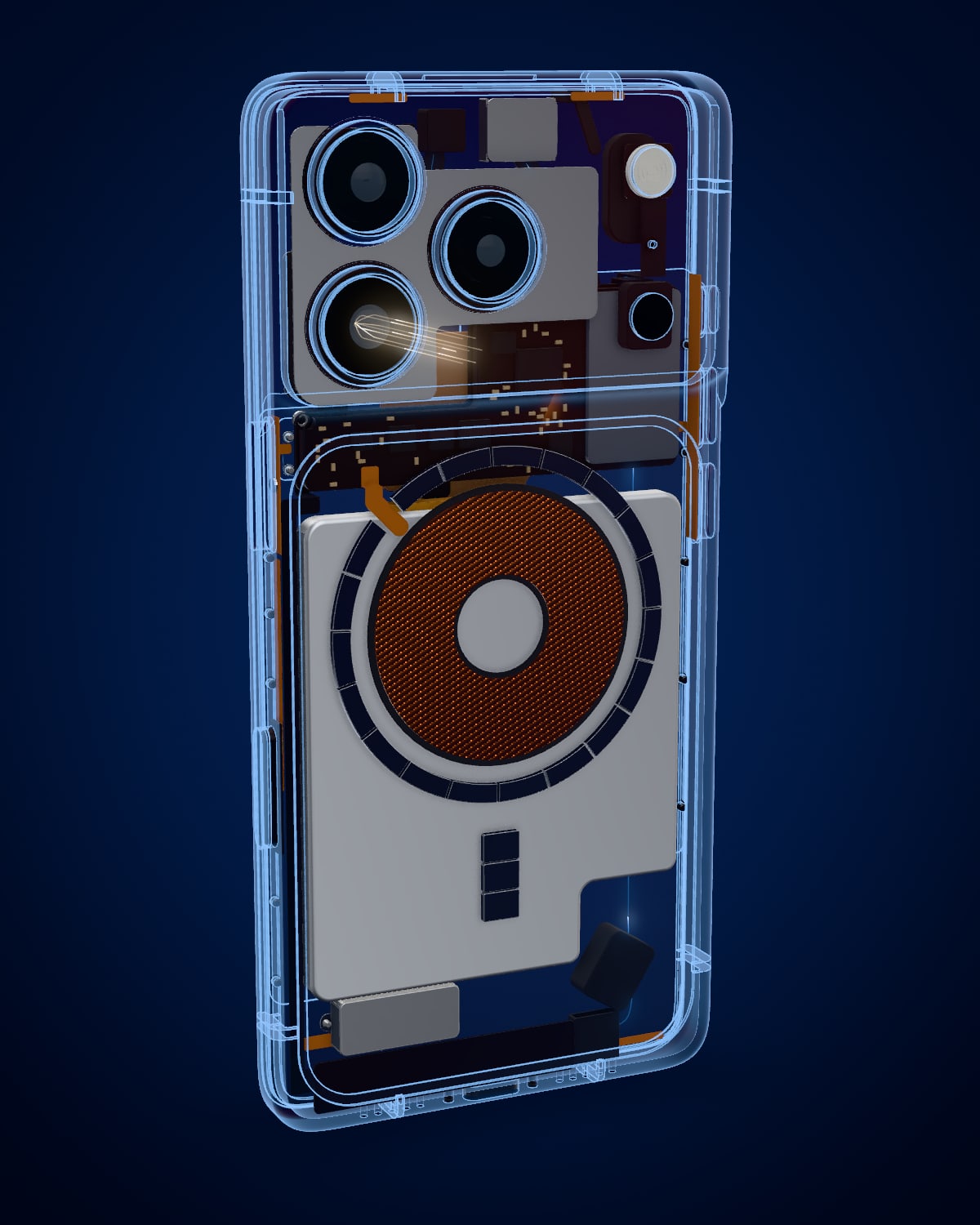
iPhone 17 Pro
What’s inside an iPhone 17 Pro?See inside
AirPods Pro
How does noise cancelling work?See inside
PS5 controller
How do PS5 adaptive triggers work?See inside
Turbocharger
How does a turbo work?See inside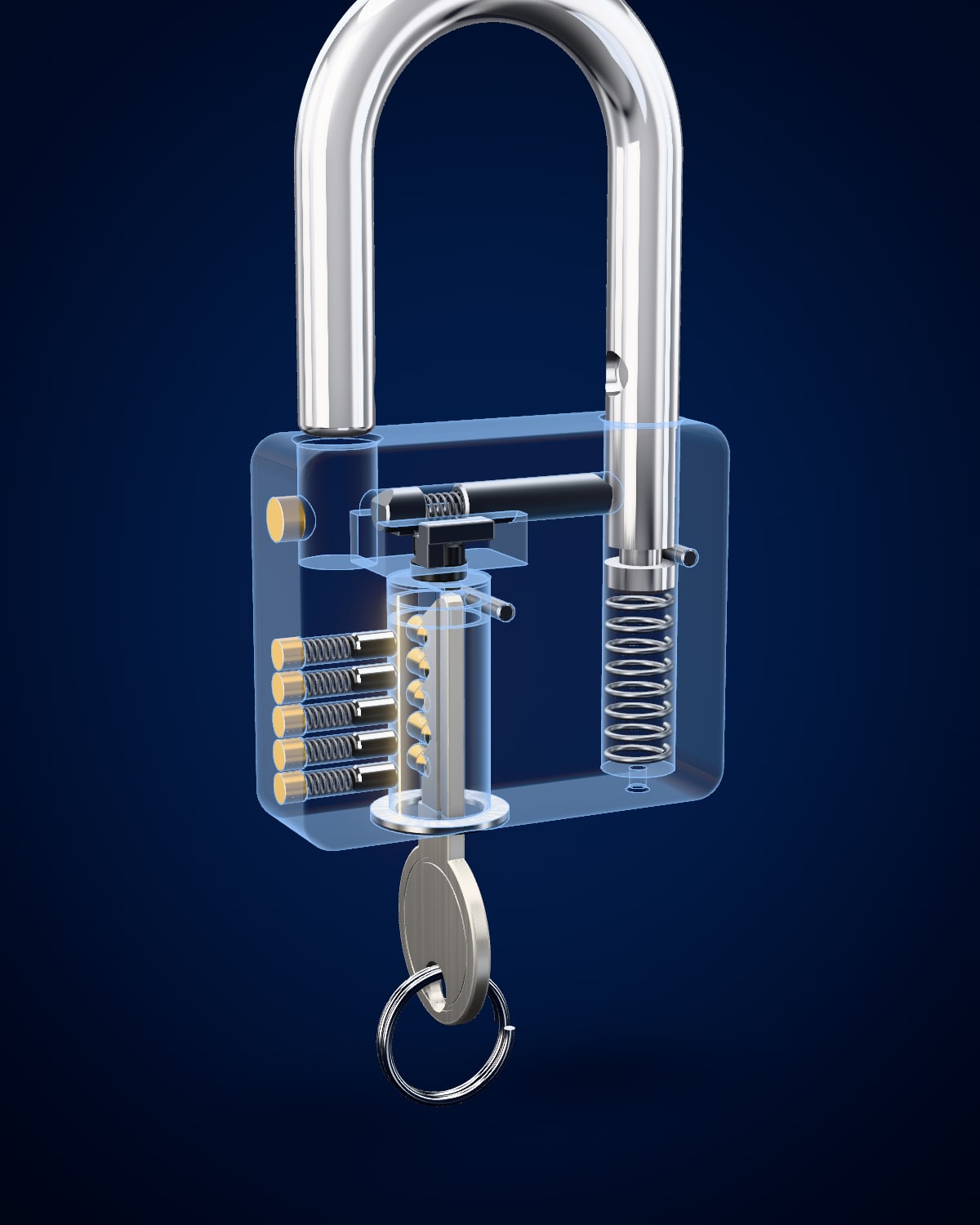
Brass padlock
How does a lock work?See inside
AirTag
How does an AirTag work?See inside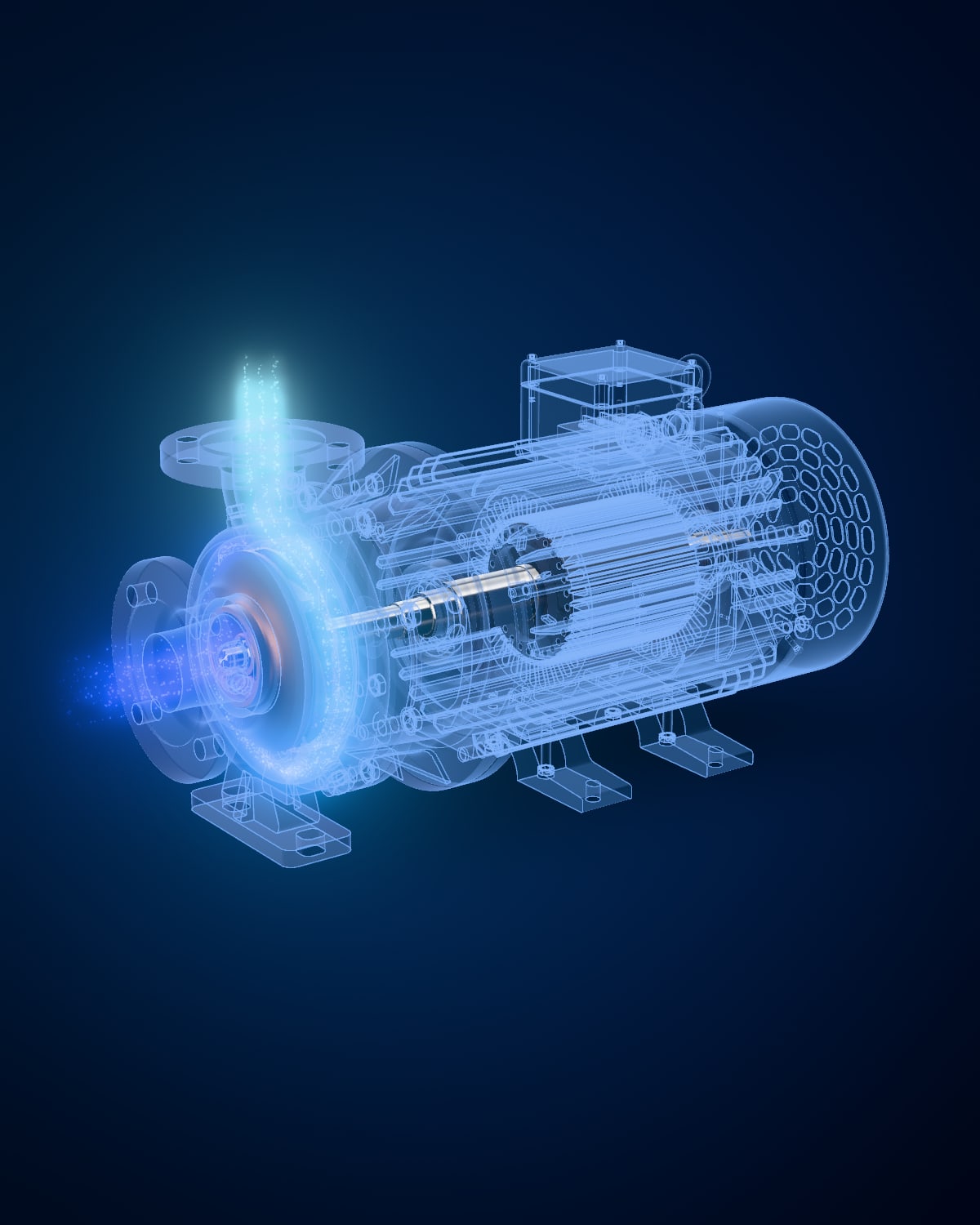
Centrifugal pump
How does a centrifugal pump work?See inside- 8 products in 3D
All of See Inside
Every product, inside and outSee them all
Made with Proofscene
This page runs on the 3D technology we use to build interactive product demos for manufacturers: built from CAD, running in any browser, on their own website.
Interactive 3D product demos