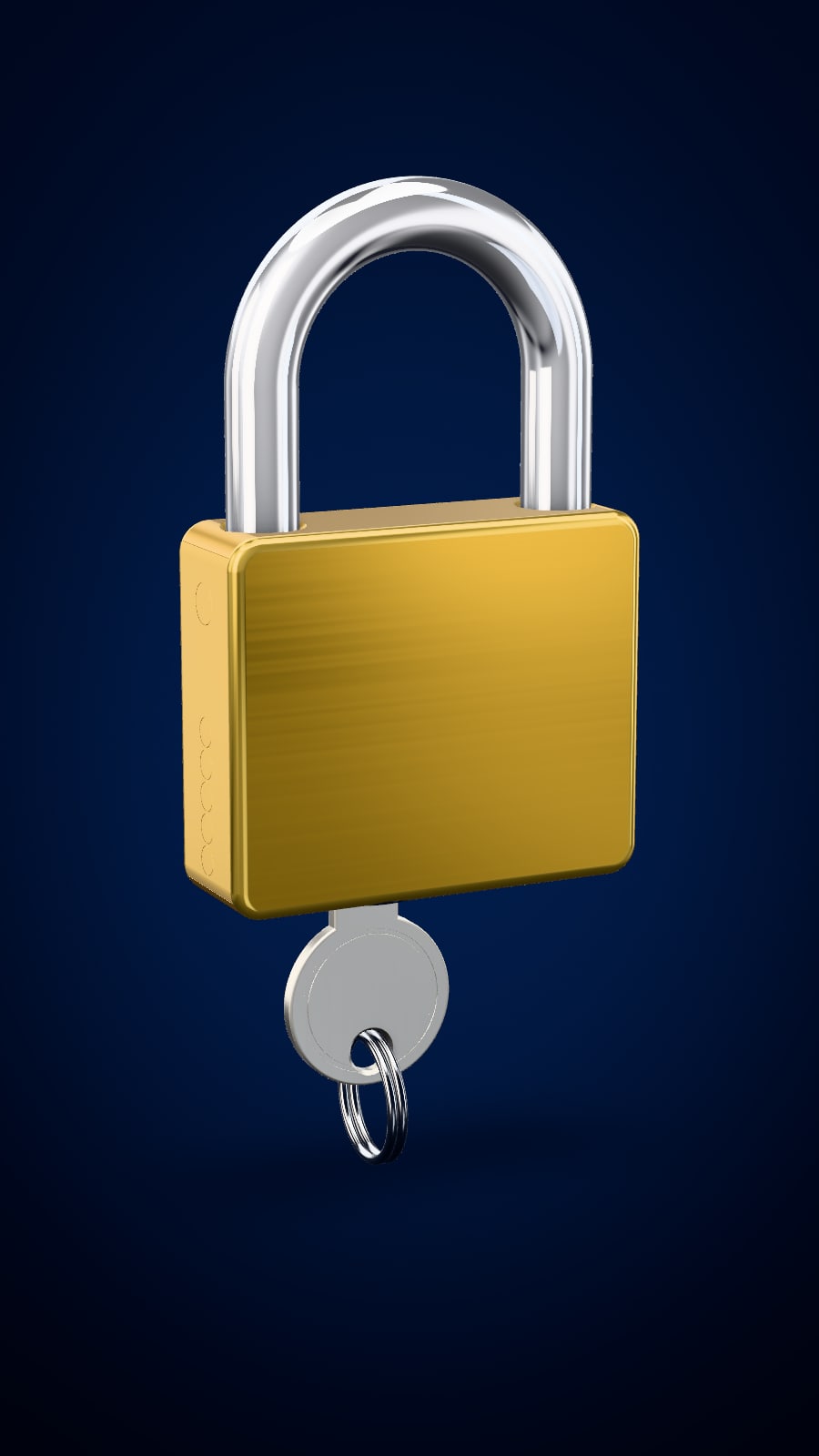
See InsideLocksUpdated
How does a lock work?
A key lock works with tiny spring-loaded pins. Five stacks of pins cross the line between the plug that turns and the body around it, and while any pin crosses that line the plug cannot move. The right key’s cuts lift every stack to exactly the right height, so the gaps between the pins line up with that line, called the shear line, and the plug turns. In this padlock a quarter turn pulls back two bolts and the shackle springs up. Watch it open above.
How it works, step by step
Follow the padlock from the outside in. Each step is something you can see happen in the 3D view above.
Locked tight
Five stacks of pins sit in holes drilled through the body and the plug, each pushed down by a tiny spring. With no key in, the top pins reach down into the plug and hold it still.
Two kinds of pins
Each stack has a key pin at the bottom, cut to its own length, and a driver pin on top. The key pins touch the key; the driver pins do the blocking.
The right key
Slide the right key in and its cuts lift every key pin to exactly the right height. The gap between each key pin and its driver pin lands right on the shear line, the edge of the plug.
A quarter turn
With all five gaps on the line, nothing blocks the plug any more. Turn the key a quarter of the way and a cam on the back of the plug turns with it.
The shackle springs up
The cam pulls the two locking bolts out of the notches in both legs of the shackle. A spring under the long leg pushes the shackle up, and the lock is open.
The wrong key
A wrong key lifts some pins too little or too far. At least one pin stays across the shear line, and the plug will not move however hard you turn.
The parts inside the padlock
- Brass body
- Solid brass, drilled for the plug, the pins and the shackle.
- Shackle
- The loop, notched on both legs for the locking bolts.
- Plug
- The cylinder that turns with the key.
- Key pins
- Five pins of different lengths that ride on the key’s cuts.
- Driver pins
- Five pins above them that block the plug until the key lifts them.
- Pin springs
- Push each pin stack down toward the key.
- Cam
- Turns with the plug and pulls the bolts back.
- Locking bolts
- Two bolts that hold the shackle by its notches.
- Shackle spring
- Pops the shackle up once the bolts let go.
- Key
- Its five cuts are the code that lines the pins up.
Brass padlock questions
Straight answers about the padlock and what happens inside it.
See inside more productsHow does a lock work?
Most key locks are pin tumbler locks. Spring-loaded pin stacks block a turning plug until the right key lifts each stack so the gaps between its pins line up with the shear line, and then the plug can turn.
What is the shear line in a lock?
The shear line is the thin gap between the plug that turns and the body around it. A pin tumbler lock opens only when no pin crosses it.
Why does the wrong key not open a lock?
A wrong key lifts the pins to the wrong heights. At least one driver pin stays across the shear line, or a key pin is pushed past it, so the plug stays locked.
How does a padlock open?
Turning the key turns a cam that pulls the locking bolts out of the shackle’s notches. A spring then pushes the shackle up, and pressing it back down snaps the bolts into the notches again.
What are key pins and driver pins?
Key pins sit at the bottom of each stack and touch the key; their lengths match the key’s cuts. Driver pins sit above them, pushed by springs, and block the plug until the key lifts them clear.
Why are padlocks made of brass?
Brass resists corrosion and wear and moves with low friction, which suits a lock that lives outdoors. Many brass padlocks pair the body with a hardened steel shackle.
How does a door lock work inside?
Many door locks use the same pin tumbler cylinder as a brass padlock. Spring-loaded pin stacks block the plug until the right key lifts each stack so its gap meets the shear line. The plug then turns, and a cam or lever on its back draws back the bolt that holds the door shut.
How can a pin tumbler lock be picked?
A pin tumbler lock can be picked because tiny flaws make its pins bind one at a time. A picker turns the plug gently, so one pin binds first, then lifts that pin until it reaches the shear line and the plug gives slightly. The next pin then binds, and the picker repeats the step for every pin.
Sources
- Solid Brass Padlock, 1-9/16 in WideMaster Lock
- Pin tumbler lockWikipedia
- Chapter 2: How a Key Opens a LockMIT Guide to Lock Picking
- Chapter 4: Basic Picking & The Binding DefectMIT Guide to Lock Picking
- How Padlocks WorkThe Engineering Mindset
- PadlockWikipedia
Make it yours
Engrave your name, your initials or your logo on the brass, choose a finish, and share your padlock with one link. Whoever opens it can turn the key and watch the pins line up.
- 1Type your name, or a website and we find its logo
- 2Pick the engraving style, the finish and the color
- 3Share your link, a picture or a short video
See inside more products
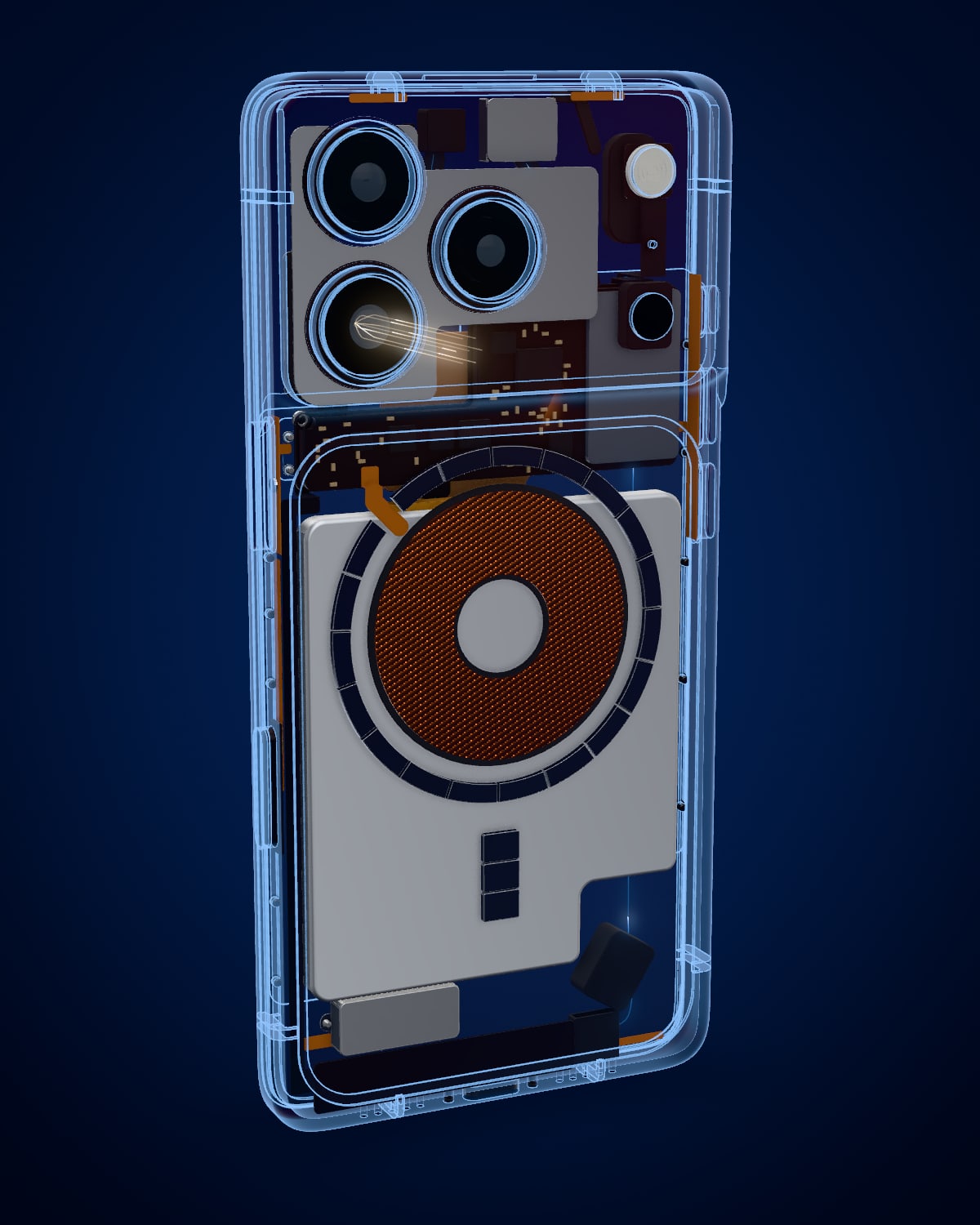
iPhone 17 Pro
What’s inside an iPhone 17 Pro?See inside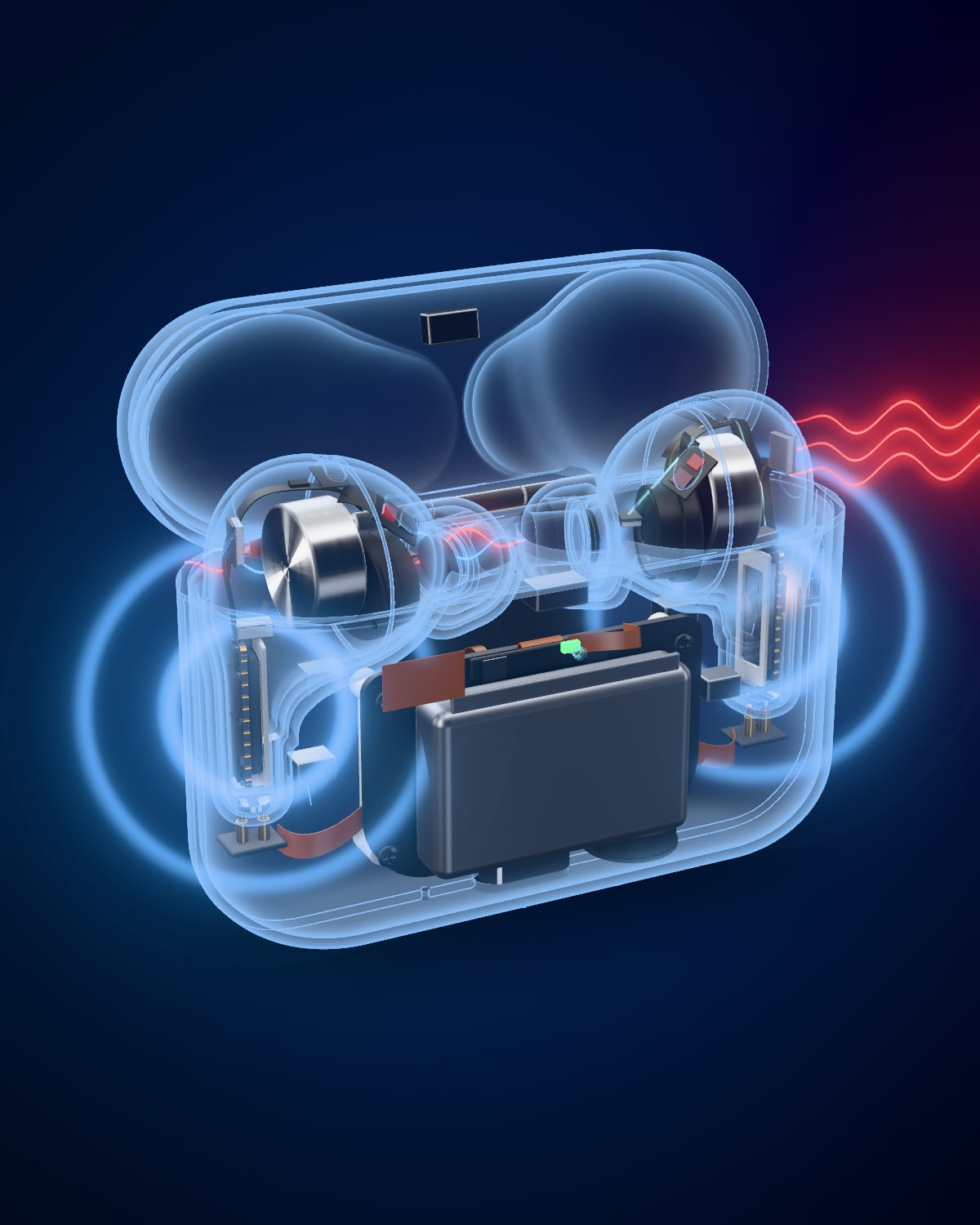
AirPods Pro
How does noise cancelling work?See inside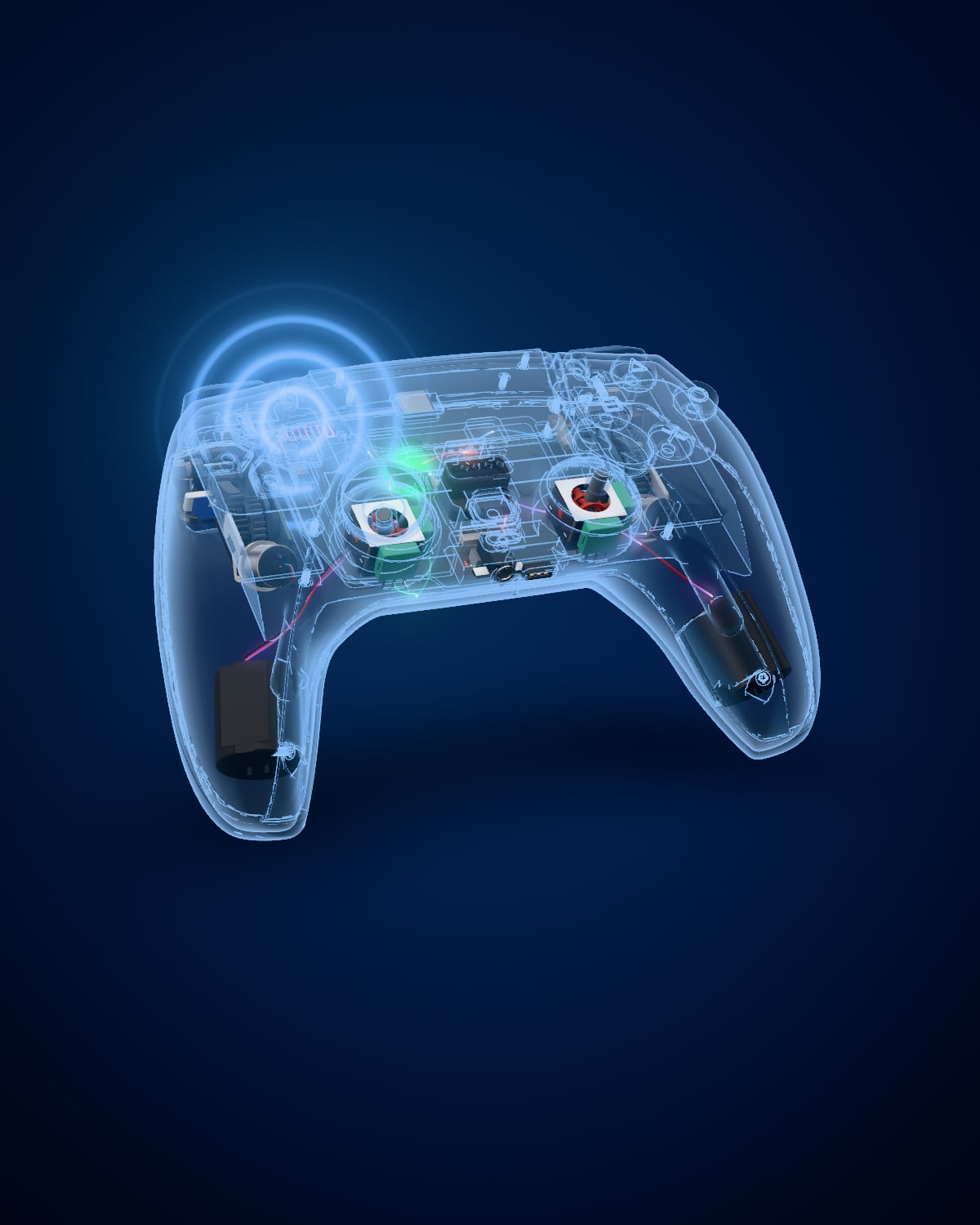
PS5 controller
How do PS5 adaptive triggers work?See inside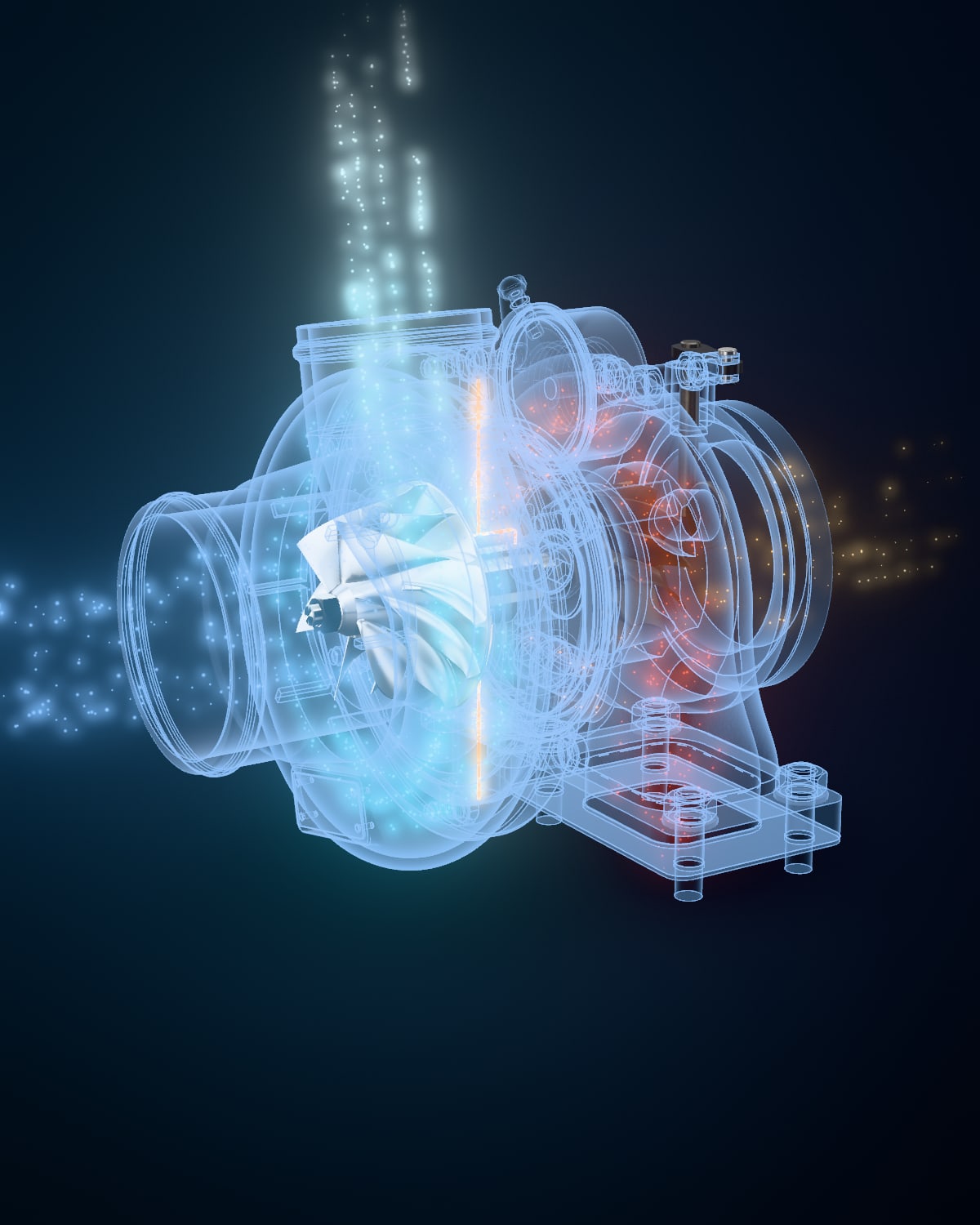
Turbocharger
How does a turbo work?See inside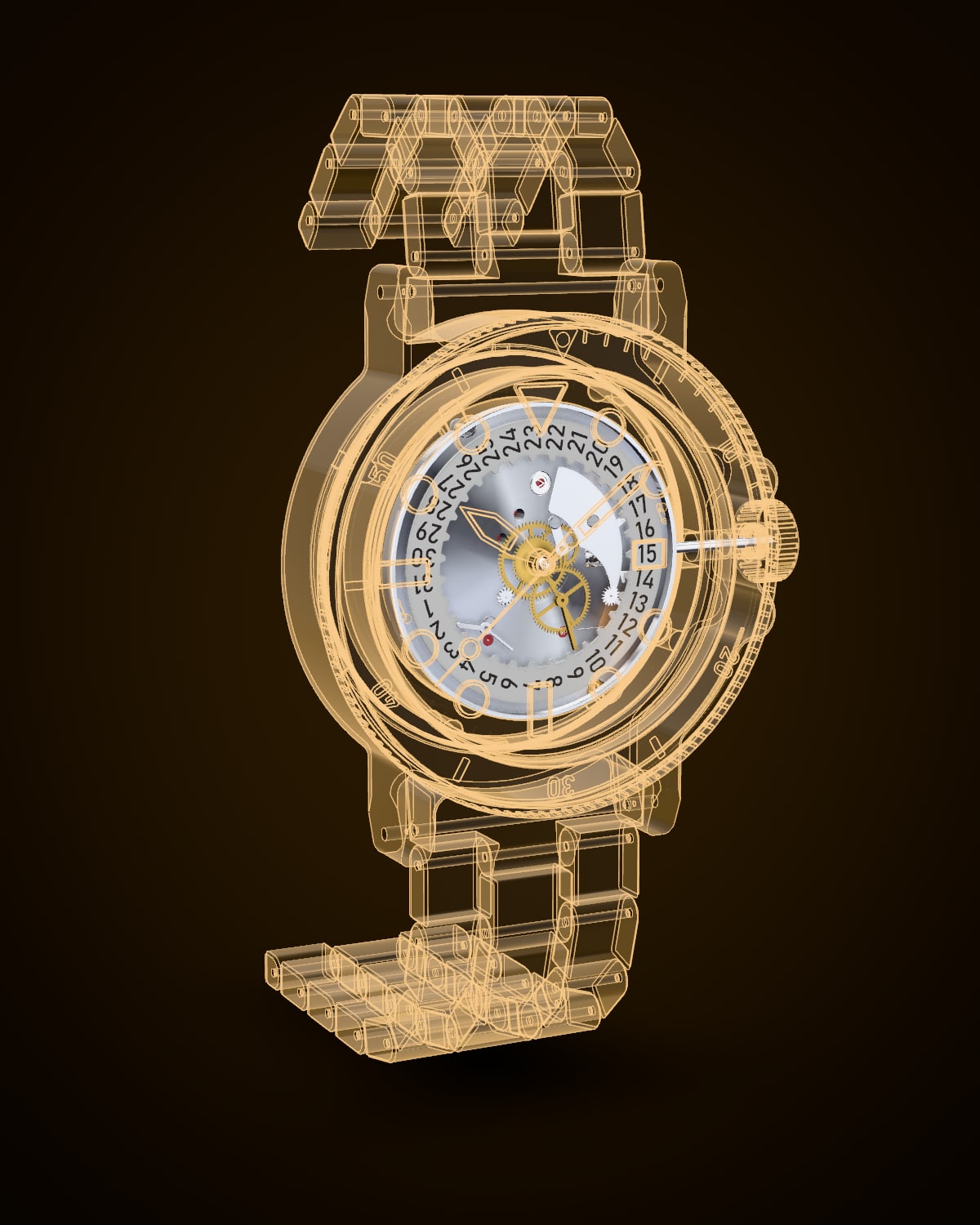
Mechanical watch
How does a mechanical watch work?See inside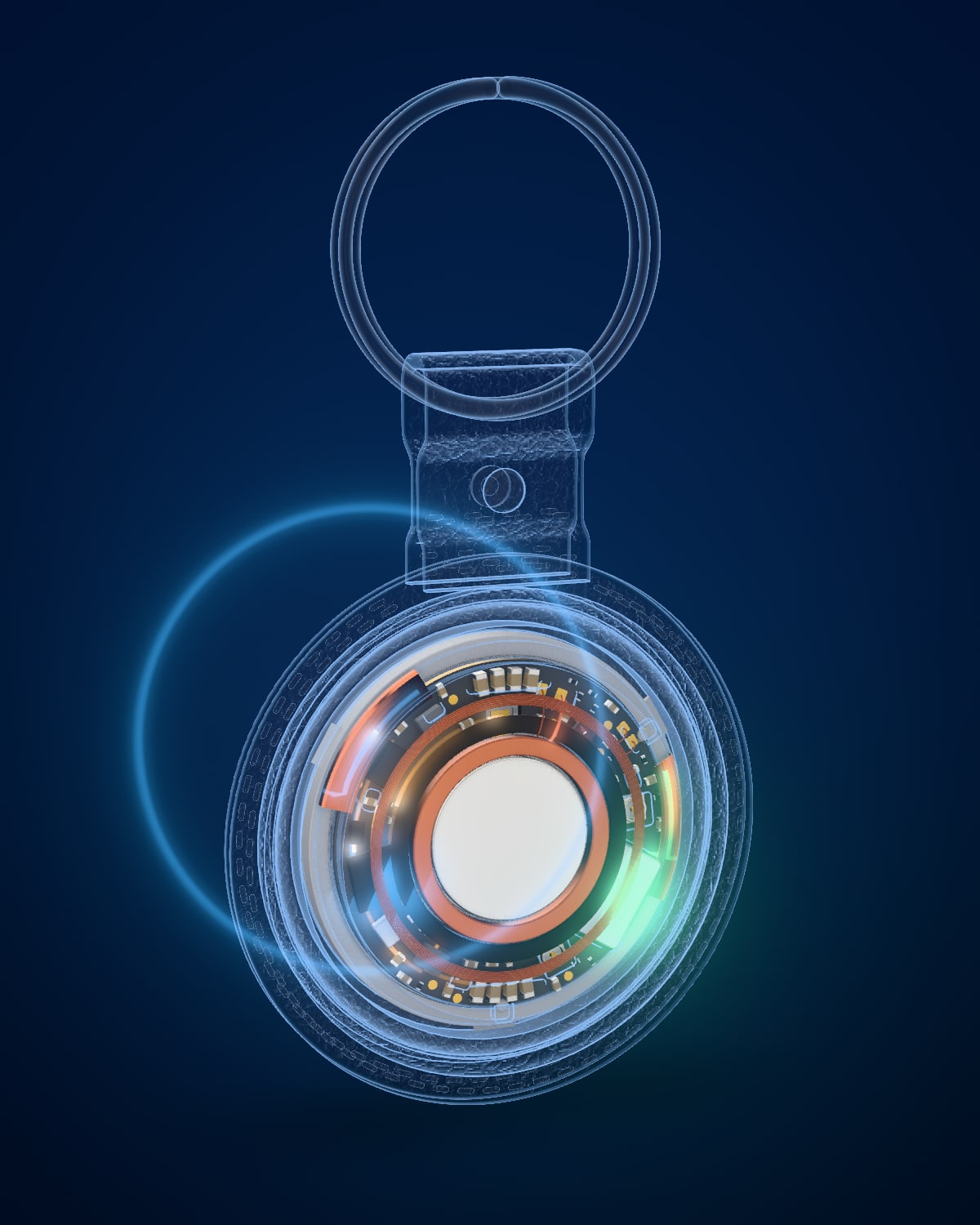
AirTag
How does an AirTag work?See inside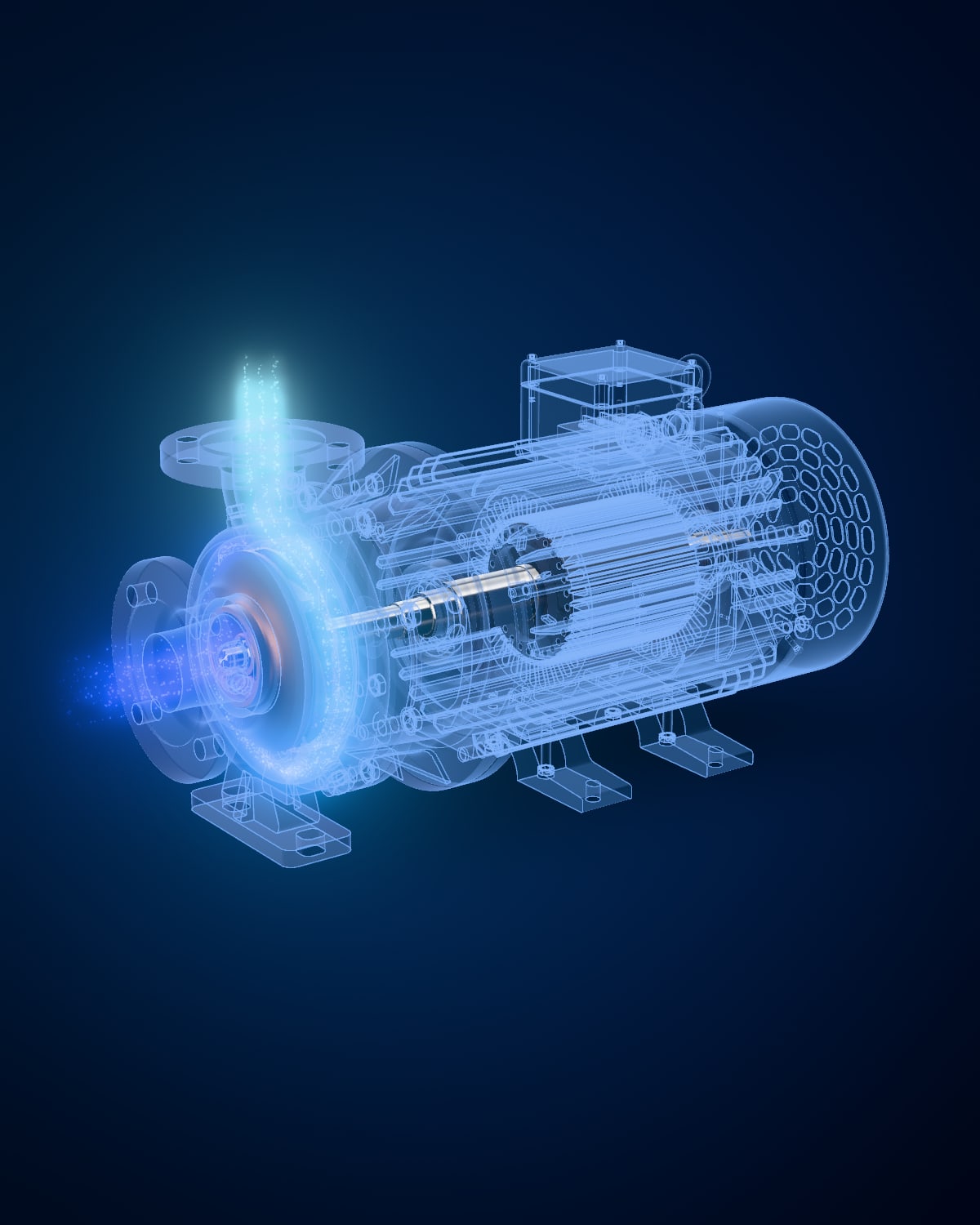
Centrifugal pump
How does a centrifugal pump work?See inside- 8 products in 3D
All of See Inside
Every product, inside and outSee them all
Made with Proofscene
This page runs on the 3D technology we use to build interactive product demos for manufacturers: built from CAD, running in any browser, on their own website.
Interactive 3D product demos