See InsideLocksUpdated
How does an ASSA Twin 6000 work?
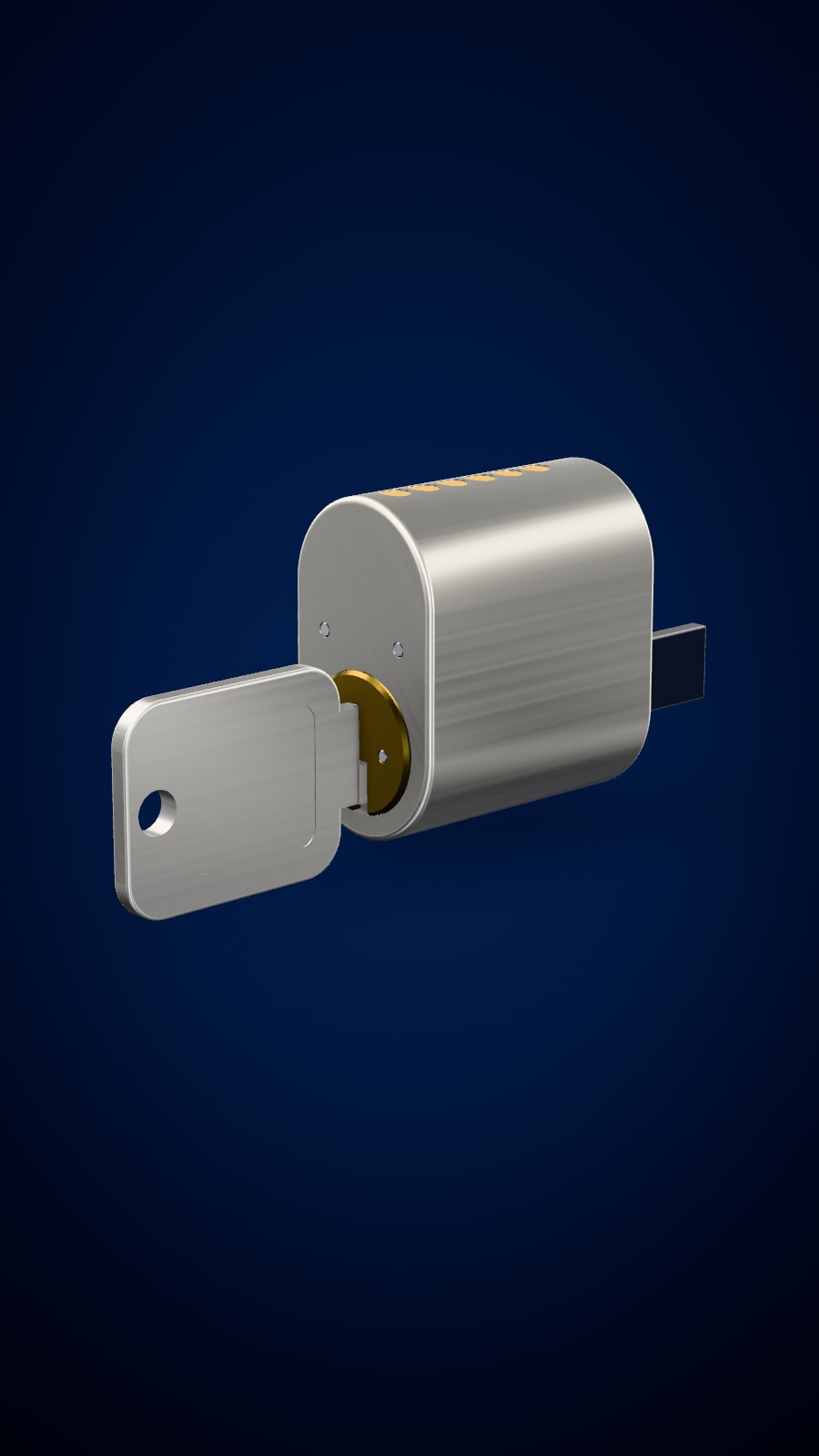
The ASSA Twin 6000 is two locks in one plug. Six pin stacks sit on top, as in any pin tumbler lock, and five side pins guard a steel sidebar at the side. The cuts along the top of the key lift the six stacks to the shear line, while a second code milled into the side of the key lifts the five side pins until their grooves face the legs of the sidebar. Only then can the sidebar slide into the plug and let it turn. Watch the key go in above.
How it works, step by step
Follow the ASSA Twin 6000 from the outside in. Each step is something you can see happen in the 3D view above.
Two locks in one cylinder
Six pin stacks stand in a row on top of the plug, each pushed down by its own spring. Beside the keyway sit five side pins, and along the side of the plug lies a spring-loaded steel sidebar. Most locks read one code from the key. This one reads two.
The key lifts each stack
The top half is a pin tumbler lock: with no key in, springs press the driver pins down across the shear line, the gap between the plug and the housing, and the plug cannot turn. Slide the key in and every stack rides up and down over the cuts, which come in nine depths, until all six gaps meet on the shear line. An ordinary lock would open now.
A second code on the key’s side
A second code is milled into the side of the blade, in five depths. As the key goes in, five small side pins ride along it and each one is lifted to its own height. Every side pin is the same: one deep groove with shallow decoy grooves above and below it.
The sidebar reads all five
The sidebar wedges the plug to the housing, so six perfect top pins are not enough. Its legs are cut at different heights. When every side pin’s deep groove faces its leg, the sidebar slides into the plug as the plug starts to turn.
Gin spool drivers
The upper pins are stainless steel spools shaped like gin bottles, in four sizes. The tops of the plug’s chambers are milled wider, so under a lock pick a pin tips and catches by its thin neck, and the plug feels open while it is still locked.
A quarter turn
With six gaps on the shear line and the sidebar free, the plug turns. The tailpiece on its back turns with it and draws the bolt.
The parts inside the ASSA Twin 6000
- Housing
- The oval body that holds the plug and the six pin chambers.
- Plug
- The 12.95 mm cylinder that turns with the key.
- Key pins
- Six pins of different lengths that ride on the key’s top cuts.
- Gin spool drivers
- Six stainless steel upper pins shaped like gin bottles, in four sizes.
- Pin springs
- Push each pin stack down toward the key.
- Side pins
- Five identical pins, each with one true groove among shallow decoys.
- Side pin springs
- Press every side pin down onto the key’s side milling.
- Sidebar
- A steel bar whose five legs carry the side code.
- Sidebar springs
- Push the sidebar out into its groove in the housing.
- Hardened steel pins
- Sit in the face of the plug, where a drill would start.
- Tailpiece
- Turns with the plug and works the bolt.
- Key
- Cut on top for the six stacks and milled on the side for the five side pins.
ASSA Twin 6000 questions
Straight answers about the ASSA Twin 6000 and what happens inside it.
See inside more productsHow does an ASSA Twin 6000 work?
It combines a six-pin tumbler lock with a sidebar. The key’s top cuts lift six pin stacks to the shear line while the milling on its side lifts five side pins. When every side pin’s groove meets its sidebar leg, the sidebar slides into the plug and the plug turns.
What is a gin spool pin?
A gin spool is a driver pin shaped like a gin bottle: a full-width body with a thin neck. In the Twin 6000 it works with chambers milled wider at the top of the plug, so a pin lifted the wrong way tips and catches by its neck.
What does a sidebar do in a lock?
A sidebar is a spring-loaded bar in the side of the plug that rests in a groove of the housing. It holds the plug still until every side pin lines its groove up with the bar’s legs, which lets the bar slide inward as the plug starts to turn.
How many pins does an ASSA Twin 6000 have?
Eleven: six pin stacks on top and five side pins. The top cuts come in nine depths and the side code in five.
Why do the side pins have extra grooves?
Each side pin has one deep true groove with shallow serrations above and below it. A sidebar leg that lands in a shallow groove stops short, so the plug stays locked.
Why does the key have milling on its side?
The side milling is a second code. It lifts the five side pins to the heights that match the legs of the sidebar, while the cuts on top lift the six pin stacks.
What makes a high-security lock hard to open?
The key has to be right in more than one way, and the parts fight back. The Twin 6000 asks one key to satisfy six pin stacks and a five-pin sidebar at once, catches a wrongly lifted pin with spool drivers and decoy grooves, and carries hardened steel pins where a drill would go.
Sources
- ASSA Twin 6000Lockwiki
- Pin tumbler lockWikipedia
- Chapter 2: How a Key Opens a LockMIT Guide to Lock Picking
Customize it
Engrave your name, your initials or your logo on the side of the cylinder, choose a finish, and share your version with one link. Whoever opens it can watch the key go in and every pin line up.
- 1Type your name, or a website and we find its logo
- 2Pick the engraving style, the finish and the color
- 3Share your link, a picture or a short video
See inside more products
iPhone 17 Pro
What’s inside an iPhone 17 Pro?See inside
AirPods Pro
How does noise cancelling work?See inside
PS5 controller
How do PS5 adaptive triggers work, and what causes stick drift?See inside
Turbocharger
How does a turbo work?See inside
Rolex Daytona
Build a Rolex Daytona in 3D and see the movement insideSee inside
Brass padlock
How does a lock work?See inside
AirTag
How does an AirTag work?See inside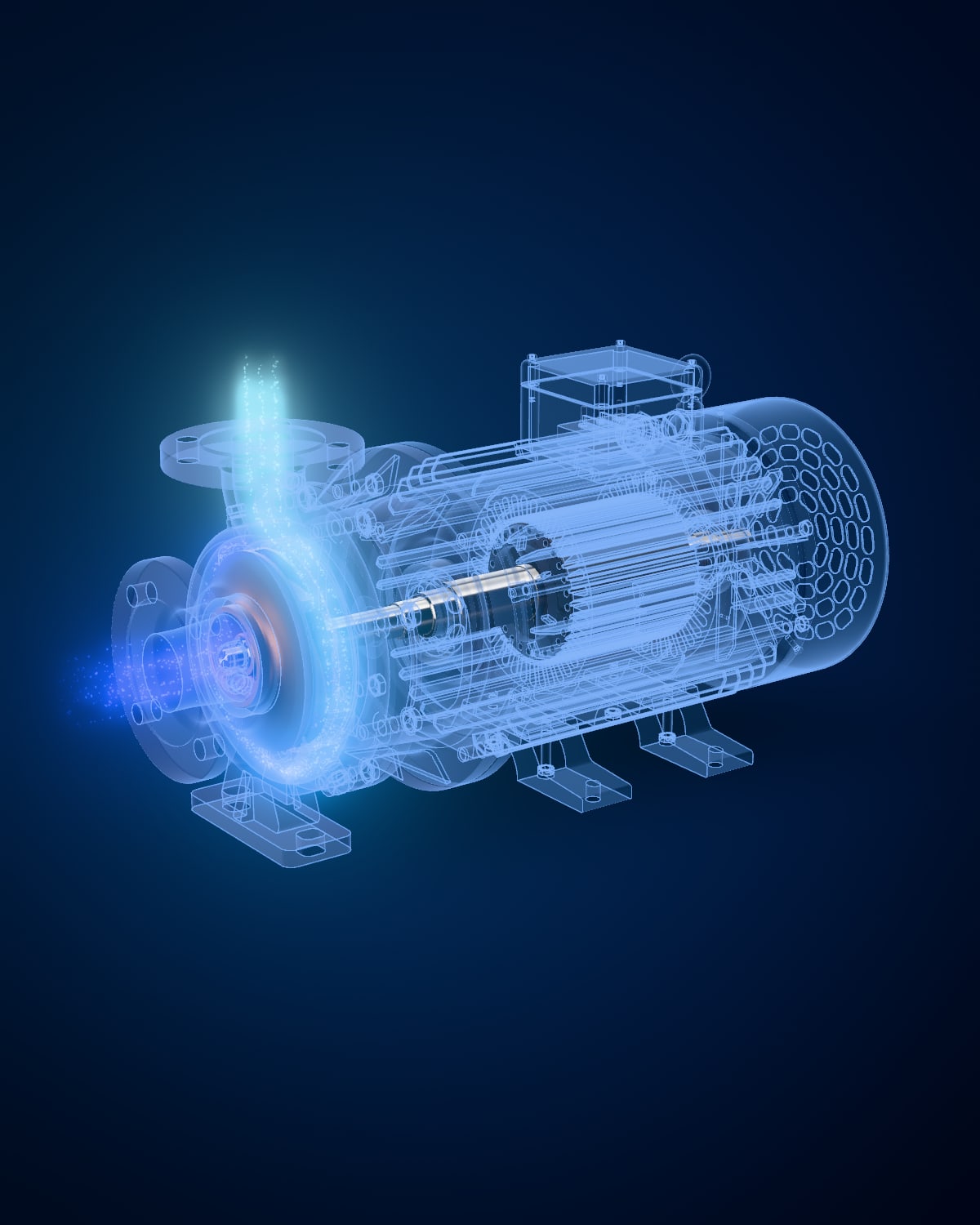
Centrifugal pump
How does a centrifugal water pump work?See inside
Made with Proofscene
This page runs on the 3D technology we use to build interactive product demos for manufacturers: built from CAD, running in any browser, on their own website.
Interactive 3D product demosASSA and Twin are trademarks of ASSA ABLOY and its affiliates. This 3D model is Proofscene’s own independent work, built from published descriptions and photographs, and Proofscene is not affiliated with, sponsored by or endorsed by ASSA ABLOY. Cylinders personalized on this page are visitors’ own designs, not ASSA ABLOY products.